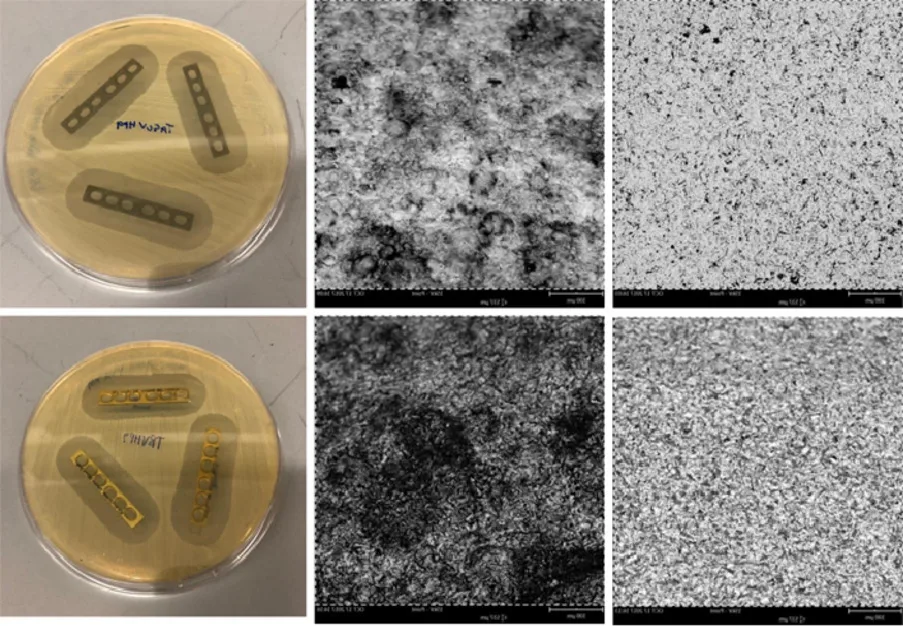
This study evaluated the efficacy of vancomycin and chitosan coatings co-deposited onto metallic implants via a plasma process within a bacterially challenged rabbit model. Utilizing the BioDep plasma technique, researchers applied thin layers of these materials to titanium alloy surfaces, which were later examined through microscopy, profilometry, and elution studies. The experiment involved forty-five nitrided Ti-6Al-4V dynamic compression plates (DCP) implanted onto rabbit femurs and inoculated with bacteria. Three groups were assessed including an unmodified control, a coated DCP, and an alumina-blasted DCP with the same coating. After 28 days, harvested samples revealed that the plasma-deposited layer successfully eluted antimicrobial agents and prevented both bacterial adhesion and biofilm formation. Although alumina grit blasting increased surface roughness, it did not diminish the antimicrobial performance of the coating. These findings suggest that plasma deposition is an effective method for applying antimicrobial agents to metallic implants to prevent short-term biofilm development.